

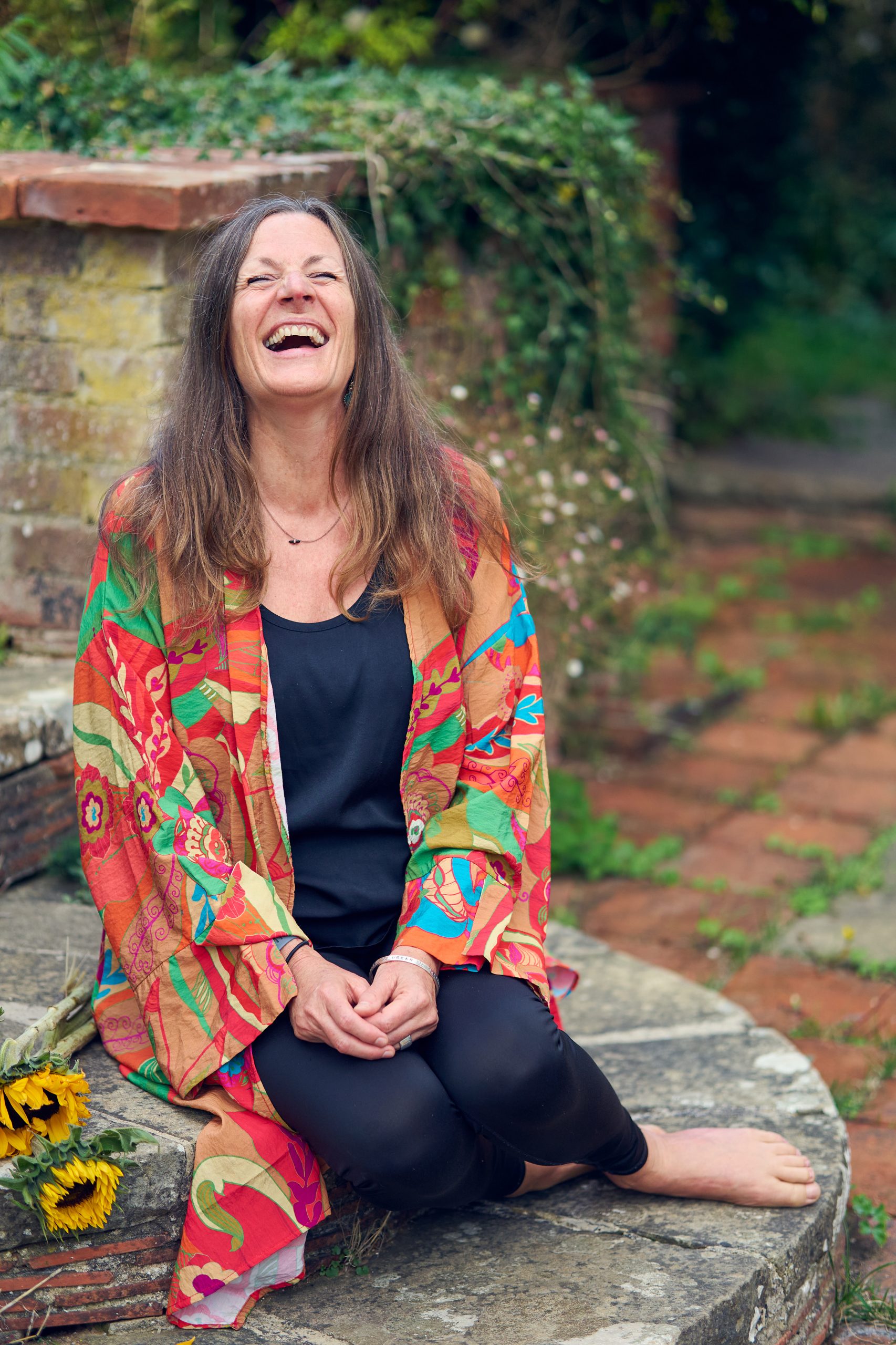
How The Joy Queen, Cat Googe, is helping people reconnect with laughter, play and the parts of themselves they may have forgotten
Joy is often treated as something that happens when life is going well whether that is during a holiday, at a wedding, on a night out or when there is finally time to relax.
But Cat Googe, known as ‘The Joy Queen’, believes we should stop waiting for those big occasions and begin making space for joy in everyday life.
A laughter yoga expert, speaker and coach, Cat’s work is focused on helping people reconnect with joy, laughter and their more playful selves. Her approach sits naturally within Wellnergy’s Joy pillar and the festival’s wider mission to make wellness inclusive, accessible, inspirational and community driven.
Cat’s philosophy is closely connected to the idea of “Living Your 365”: making space for joy throughout the year rather than waiting for the weekend, a holiday or the next significant milestone before allowing yourself to feel good. You can find out more about Cat’s work on her website.
Rather than presenting wellbeing as a fixed formula, Wellnergy encourages people to explore wellness in a way that works for them, through experiences that can support them physically, mentally and socially. Cat’s message is similarly simple and challenging where joy does not have to be loud, complicated or earned. It can be small, quiet and deliberately practised.
For Cat, the discovery of joy began with laughter yoga as she explains in our latest Wellnergy Voices feature as we hear from experts from around the world.
She said: “The reason laughter yoga came into my life is that I experienced it on a wellbeing day when I was a primary school teacher. I did the workshop for 60 minutes and had this massive, full-body awakening during the session. It was like my whole body had suddenly come alive and I had found this missing piece of what I was looking for.”
The experience was powerful because it revealed a kind of joy that was not dependent on external circumstances.
“Essentially, I was in a wonderful marriage, which I still am and have two amazing children, with lots of lovely, joyful things going on in my life,” she explained. “However, this unlocked a real inner joy based on me, created by me, for me. It was a very different kind of activation.”
It is possible to have a full life and still feel disconnected from yourself. Responsibilities, routines, work and the needs of other people can gradually push playfulness and spontaneity to the margins.
“I think it is true to say that many of us can have all these wonderful experiences going on, but perhaps we do not have the light fully switched on inside ourselves.
“That is what laughter yoga did for me. It literally switched the light on and I thought, ‘Wow, this is the thing I have been searching for.”
Cat believes joy should not be seen as an indulgence or a reward for completing everything else. It deserves to be part of the everyday picture.
“I talk about giving joy a seat at the table. Do not ignore joy, make space for it and allow it to become a regular practice. That might be as simple as stepping outside with a hot cup of tea, taking a pause and having a breath, or doing some laughter yoga.”
This is not about adding another demanding routine to an already busy day. It is about noticing small opportunities and choosing to use them.
“That does not mean doing 90 million wholesome things before we do anything else, that can feel unrealistic, particularly if you are busy at work, a parent, or a busy working parent. It is about finding small opportunities.”
Many people associate joy with events that are unusual or celebratory. Cat’s challenge is to question that pattern.
She continued: “People often think joy happens only on big occasions. But the important shift is to reprogramme our brains. If we wait for the two weeks that we are on holiday, there are 50 weeks where we are bypassing joy and not allowing it to join us.”
Waiting for the perfect conditions can mean missing the joy that is already available. Cat suggests developing what she calls a joy radar, a deliberate awareness of the sights, sounds, people, places and activities that create a positive spark.
“We need to rewire our brains to become joy seekers and look for the things that give us joy. As I sit here doing this interview, I can look out at my garden, the sun is shining and I can see the greenery, that gives me a hit of joy.”
The point is not to force happiness or pretend that difficult feelings do not exist. Cat is clear that joy is not the same as toxic positivity.
“I teach joy from a place of absolute realness. Allow all your feelings, because when we allow all our feelings, we can give joy a seat at the table.”
“I think we can sometimes tell ourselves that feeling joy is toxic positivity, but I do not believe that, not if we also allow grief, sorrow and all the other feelings. If we allow all our feelings to arrive, honour them and notice them, we absolutely get to have more joy in our lives.”
Making room for joy is therefore not about denying sadness, stress or grief. It is about refusing to let difficult emotions take up all the available space.
Cat kindly provided practical tips for finding joy
1. Give your attention a direction
Cat believes the way we begin the day can influence how we experience it. That does not mean creating an elaborate morning routine, but it does mean being more intentional about where our attention goes.
“There is so much evidence that the way we start our day makes a massive difference,” she explained. “Being intentional about how we want our day to look and feel, rather than simply arriving in it, falling into our phones and doom-scrolling, is really important. We need to give attention to our attention.”
A simple starting point might be to delay reaching for your phone, step outside, take a breath or identify one thing you want to notice during the day.
2. Make a visible joy list
When people feel overwhelmed, they may not have the energy to think of something that could help. Cat recommends preparing that list in advance.
“I often say to clients: create a joy list and put it up somewhere visible, so when you are feeling overwhelmed, you do not have to think of the thing, it is just there.”
The list should be personal rather than impressive. It could include going outside, listening to a favourite song, dancing, calling a friend, swimming, running, taking a quiet pause or having a cup of tea.
“Whether that is getting out in Mother Nature, putting on a banging tune and dancing, or stopping and having a breath, put it on the list, but make it U-shaped,” she said.
In other words, choose things that you feel like. A joy practice should be something you want to return to, not another standard you feel you have failed to meet.
3. Find five minutes
Time is one of the most common reasons people give for not prioritising themselves. Cat’s answer is deliberately straightforward.
“Find five minutes and do one thing that puts a smile on your face. Notice how it feels to do that for seven days.”
Five minutes may not change every problem, but it can create a small interruption to the cycle of rushing, scrolling and serving everybody else’s needs first.
“The bigger frame of this is that it is about being self-ful. Giving space to yourself is not selfish, it is self-ful. Fill your own needs and everyone else will benefit too.”
4. Look up and activate your senses
Joy can be easier to notice when we stop moving through the day on autopilot. Cat suggests using everyday routines as opportunities to look around.
“If you are doing the school run, can you look around as you are walking instead of rushing, rushing, rushing? What can you see? What can light up your senses? What can really activate you, sights, sounds, smells?”
Her advice is to notice what is already around you rather than waiting for a major change of scene.
“There is joy all around us. We just need to activate our joy radar.”
She also encourages people to reconnect with their younger selves.
“It is about activating your inner five-year-old, because they are such teachers when it comes to what joy looks like. When you do that, when you step into that five-year-old self, ask, what are they getting lit up about? Then go with that.”
For Cat, laughter and joy are not simply temporary distractions. They can help people reconnect with their bodies, confidence and sense of possibility.
She recalls one person who attended a festival laughter yoga workshop and shared afterwards that she had not laughed for 10 years.
“A person came to a festival last year and shared at the end of my 60-minute workshop that she had not laughed for 10 years.
That is huge, isn’t it? She came to a laughter yoga workshop, stayed throughout and gave me the biggest hug.
“In those 60 minutes, it completely changed her life and put it on a different trajectory.”
Cat also describes the impact of working with a client who began to feel more visible and connected.
“Another example comes from a client I worked with one-to-one for six weeks. One of the phrases that really stayed with me was when she said: ‘I look up now instead of looking down.
“To me, that was such a beautiful permission slip for her to be herself. She looked up, made eye contact with people and allowed herself to be seen.”
She believes people can create their own routes into joy, whether through nature, movement, stillness, laughter or connection.
“For busy professionals, parents and carers who feel they do not have time, my go-to joy hacks are about making U-shaped choices, because it has to feel like you.”
“I know there is always joy when we go into Mother Nature. Get to a park, get to the woods, get into the sea. Or look at the sea, walk along the beach and hear the crunch of pebbles or sand beneath your feet.
“Movement always helps me. That might be a full-body shakedown, dancing, skipping around or simply giving your body some movement.
“Laughter is obviously always a winner and stillness and breathing are also so powerful.”
“It is about remembering the things that put a smile on your face. Maybe that is a conversation with a friend. Maybe it is going for a run. Whatever the thing is, we can absolutely create our own joy hacks and, in doing so, open the gateway to joy.”
Cat’s connection with Wellnergy began through the festival environment, where people can try different approaches to wellbeing without having to commit to one prescribed path.
“Wellnergy offers a real smorgasbord of different experiences, so people can dip their toe in and try breathwork, yoga, CrossFit, laughter, dance or whatever appeals to them,” said Cat.
That spirit of exploration reflects Wellnergy’s inclusive approach to create welcoming spaces, try something new and discover what makes you feel more energised and connected.
As I said before, people can forget the things that used to make them laugh, have fun and feel playful. Wellnergy gives people permission to play, discover and unlock some of those hidden spaces that they may have forgotten all about.”
Cat has been part of Wellnergy for the past three years and now represents the festival’s Joy pillar as as an Ambassador for Joy.
“I love it,” she said proudly. “I have been part of Wellnergy for the past three years and I love how it is expanding and developing, particularly because joy is a key pillar. I am totally here for that, and that is why I am a Joy Ambassador.
Wellnergy’s London festival returns to Wimbledon Park from Friday 11 to Sunday 13 June 2027, bringing together talks, workshops, fitness, yoga, breathwork, music, food and other experiences across its wellness zones.
The festival is designed to help people explore wellness in a way that feels inclusive, social and personal. Find out more about Wellnergy’s approach to wellness.
Ready to rediscover joy and explore wellness your way? Get your Wellnergy 2027 tickets and join the community at Wimbledon Park from Friday 11 to Sunday 13 June.
Want to explore Cat’s approach to laughter, joy and Living Your 365? Visit Cat Googe’s website to find out more.