

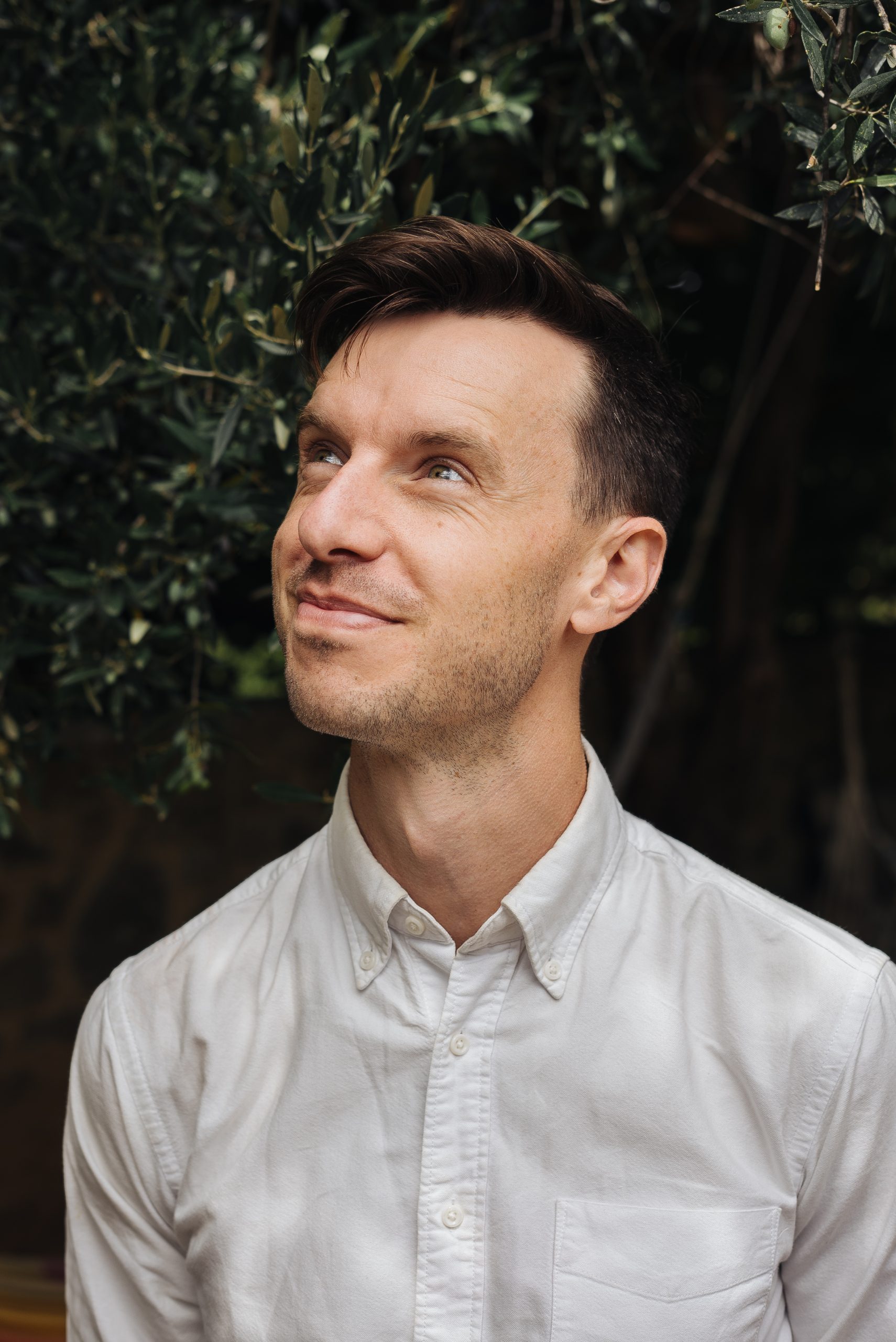
“I had male friendships, but nowhere to talk about the things that mattered most.”
Pasco Ashton had male friendships, but felt he had nowhere to talk about the things that mattered most. In late 2019, he began recognising a need for deeper connection: somewhere to speak honestly about relationships, hear other men’s experiences and understand himself better.
Experiencing a men’s circle in 2020 gave him a way to explore that need. He began bringing men together himself, helping build what became Men’s Circle: a dedicated space to practice emotional awareness, listen and support one another through life’s challenges.
Today, Pasco is the founder and CEO of Men’s Circle, a self-development club for men which has facilitated over 1,800 circles since 2021. According to the organisation’s member feedback, 84% of members report that circles improve their emotional intelligence and regulation, with overall member satisfaction averaging 9.3 out of 10.
For Wellnergy Voices, Pasco reflects on the support he needed himself, what happens inside a circle and why emotional wellbeing deserves a regular place in our lives.
What first made you recognise the impact of loneliness?
“In late 2019, I realised I had male friendships, but they weren’t particularly deep. We had fun together, but there was a part of me that wanted more. I wanted somewhere to talk about relationships, sex and intimacy, and the things I was finding difficult.
“I wanted to hear from other men, too. What could I learn from someone who had been married for 20 years? What were other men going through that we never spoke about?
“I first experienced a men’s circle in 2020 and began bringing men together myself. That was before I became a father. Fatherhood brought another experience of loneliness.
“When I became a father, we were living in rural Wales and I didn’t know any other dads locally. I was the first in my friendship group to have a child, and I felt isolated in that experience.
“That first year of fatherhood involved so much change. My life was completely different, and I was trying to adapt without other dads around me who were going through it too.”
You describe circles as “mental fitness.” What does that mean?
“For me, a circle is a practice. You make time each week to notice what’s going on inside you, put it into words, and listen to other men doing the same.
“We understand that physical fitness takes practice. You don’t go to the gym once and expect to stay fit. I see emotional wellbeing in a similar way. The benefit builds through coming back, developing skills and getting to know yourself over time.
“I want that to become an ordinary part of life: somewhere you go to take care of yourself and develop the skills to meet life’s challenges, before everything feels overwhelming.”
What can a circle offer that a friendship might not?
“Friendships can offer this too, but I wasn’t finding it in mine. The difference is that everyone in a circle has chosen to be there for that purpose.
“You’re practising emotional intelligence together. You can read about self-awareness or listening, but at some point you have to practise with other people. It’s like learning to drive. A book can only take you so far.
“You might hear a man describe something you’ve felt but never found the words for. Or someone at a different stage of life helps you see your own situation differently.
“There’s a trained facilitator and a structure to support that. You have time to speak, and you also learn how to listen. Both matter.”
What can someone expect when they first join?
“We offer a free four-week trial of our online circles so men can experience it firsthand. It can be hard to fully understand a circle until you’ve sat in one.
“We establish clear agreements around confidentiality and respect. We check in, take a moment to settle, and make space for men to share what’s happening in their lives. Participation is invited, and everyone is free to go at their own pace.
“After the trial, men can choose to join a private circle with a dedicated facilitator and the same small group each week. The initial commitment is 12 weeks, which allows trust and familiarity time to grow naturally.”
How does the work deepen over those weeks?
“We begin with self-awareness and our life stories. Where have I come from? What experiences have shaped me? Hearing each other’s stories helps us understand the person behind the first impression.
“Then we look at the present. I think of it as an MOT for your life. How are my relationships? What habits and patterns am I repeating? What does my week actually look like?
“As trust develops, we can explore things that are harder to talk about, such as intimacy, money or our relationships with our parents.
“Then comes action. Given what I understand about myself, what do I want to do? What matters enough for me to change, and how can the group support me in following through?”
What difference has it made in your own life?
“Having a weekly place to talk has helped me through some difficult chapters, including the adjustment to fatherhood. I’ve had somewhere to express what I’m feeling and get support, rather than keeping it all inside.
“Through speaking, listening and practices such as breathwork, I’ve become better at noticing my emotions and putting words to them. That helps me be more present with my partner when emotions are running high, too.
“But the magic sauce is the listening. Each week, I get to step outside my own concerns and give another man my attention. There’s something very valuable in being there for someone else.
“I’m part of the practice myself. I still need that space and that support.”
Is there a member’s experience that has stayed with you?
“One man found it very difficult to ask for what he needed or set boundaries. He wanted to be the nice guy, and that often meant putting himself last.
“Over a year together, we watched him find his feet. We supported him, but we also challenged him. Gradually, he became clearer about what he needed and what he was willing to accept in his relationships.
“Watching someone develop that confidence and sense of self-worth stays with you. It’s his work and his progress. The circle gave him people to work through it with.”
How do you make time when work and family life are already busy?
“I see my circle as part of the support I need to live my life well. If you’re running a business, you recognise that you need people around you. I’ve come to see my emotional and relational life in a similar way.
“It’s 90 minutes each week when I can let go of some of what I’ve been carrying in my head and my heart. I know that time is there, even in a busy week.
“It feels good to ask for that time and explain why it matters to my loved ones. Taking care of myself helps me be more available to them.”
What would you like to see happen next?
“I’d love it to become normal for a man to have a community where he can talk honestly, learn about himself and be supported and challenged.
“That might be a local group, an online circle or something built around a shared experience, like fatherhood. We’re working to give more people the training and support to lead circles in their own communities and workplaces.
“I believe men need more attention, more care and more love. I want more men to experience what it’s like to have people around them who are willing to listen, and to offer that to others.”
Find out more about Men’s Circle and explore Wellnergy.