

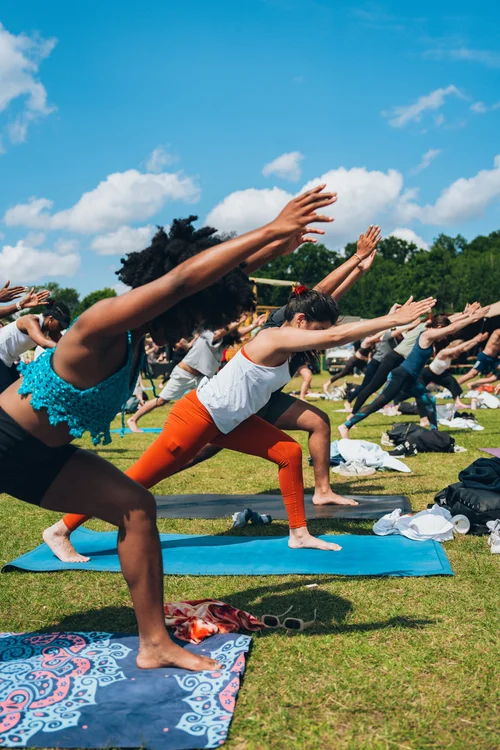
Joy in a healthy routine should be allowed because health is an intentional, whole-person effort, not an evaluation of perfect habits. An optimal routine will allow for some pleasure in your daily life, you’re busy and sometimes time or energy is short. Using a routine that allows for fun and connection will allow you to personalise and potentially sustain this new routine. When we look at our routines and their ability to provide us with feelings of wellness, a great routine includes things that bring you joy, regardless of how big or small.
Wellness Goes Beyond Physical Wellness
Wellness is being proactive in selecting actions/life choices that contribute positively to health across multiple areas of your life – not just absence of illness. Holistic refers to considering health across six interconnected physical, mental, emotional, social, spiritual and environmental areas. There are many alternative approaches/models that organize these dimensions differently. Occupational wellness is included as a seventh dimension in addition to the first six. This is just one example and not universally applicable. Models that group areas in groups of four and five also exist, therefore it would be beneficial to understand how each model defines its terminology.
There is one definition that encompasses a complete person pursuing an ongoing process – wellness. One word that is often used as a quick shorthand is thriving/flourishing, which is the most common everyday term for well-being. Well-being refers to your overall positive functioning, whereas wellness refers to the choices you make to promote it.
In general, there are seven basic principles that can be applied to wellness: holistic, multidimensional, self directed, active, evolving, preventative and influenced by the environment around you. There are examples of four and five pillar models that combine similar areas. Wellness is spelled with two L’s (wellness) versus the misspelled wellness.
The idea of wellness encompassing both the body and mind is present within the philosophical ideas of ancient civilizations in India, China, Greece and Rome. The concept of modern wellness evolved throughout the 19th century in Europe and the United States and reached greater prominence in the 1960s and 1970s. Use the dimensions as a starting point for reflection rather than a checklist that needs to be completed.
Building Joy into a Flexible Routine
Taking a short walk outside and talking to someone you trust once per week can create opportunities for joy without creating additional constraints. Research conducted in 2025 involved conducting qualitative interviews with fourteen adults residing in the UK who were aged between twenty-eight and fifty-nine regarding joy and well-being. Participants identified positive relationships, spending time in nature and increased self awareness as methods for sustaining joy. Social pressures, negative relationships and emotional burdens were identified as factors that made it difficult for participants to maintain joy.
These viewpoints represent the perspective of a small sample size and are not intended to represent everyone. As previously mentioned, your health, obligations and available energy levels affect what is feasible in your life. Consider establishing a very simple goal – take a regular walk in nature, contact someone you care about regularly or spend a couple of minutes thinking about yourself. The goal should be modest enough to accommodate your lifestyle. You can adjust the goal when your energy and/or situation changes.
Use the 5-3-1 guideline as a reference point for inspiration; however, view it as a flexible guide – not a pass/fail standard. Spending time conversating with someone may result in feeling more engaged than participating in an activity with someone while being distracted.
As mentioned earlier, developing connections may not be easy. If a relationship appears strained or if external pressures/and/or emotional burdens are weighing upon you, establish a goal that acknowledges these limitations. You do not need to force joy or mimic someone else’s method. Establish one goal that fits your schedule and is adaptable when your energy levels.
Variety in Movement Can Create Fun Habits
While research indicates dance can contribute to enhanced measurable psychological well-being (longer-term benefits remain unknown), research on dance programs in education settings reviewed forty-six studies (fifteen randomised-controlled trials) and reported positive well-being outcomes; however, long-term study of dance-related well-being was lacking.
Research indicated that eighty percent of the studies did not have a theoretical basis. While dance may enhance cardiovascular endurance, lung capacity, flexibility and ease anxiety/stress/social isolation, it does not necessarily mean every class/dance style is suitable for every body type/setting.
An assortment of leisure activities may support well-being better than focusing on a singular area. Research demonstrated multi-component positive psychology programs (with nineteen thousand participants) supported better well-being than single-component programs (across four hundred nineteenth random-control trials).
Leisure activity was shown to correlate with subjectively perceived well-being among eleven thousand eight hundred thirty-four individuals. However, the correlation was low (r= .26) and frequency/volume of activity contributed more to well-being than total hours of participation. Therefore, there is latitude to attempt various forms of movement/activity-based wellness programs that work for you, without equating quantity/time with value.
Find Local Options for Wellness Programmes
A dance class can serve as a means of promoting wellness, however, a quiet walk may provide equivalent benefit for you. Select a form of exercise activity that works for you consistently vs. viewing intense habits as the only measure of success.
Festival environments can provide the opportunity to explore various forms of wellness-related activities without requiring mastery of an idealised routine. The Wellnergy Festival will occur over three consecutive days (Friday June 11th-Sunday June 13th) at Wimbledon Park in London.
Make Room for Joy at Wellnergy in Wimbledon Park
A festival can make room for trying activities without asking you to master a perfect routine. Wellnergy Festival runs for three days, from Friday 11th to Sunday 13th June 2027, at Wimbledon Park, London.
Its six wellness zones include music, workouts, talks and food from many of our amazing partnered vendors. Featuring yoga, fitness, breathwork, DJs, sound healing, reggae music, motivational talks and workshops. Experts and brands lead talks, activities and workshops across the three days.
Wellnergy offers one optional way to explore what might suit your life and support your quality of life. You can browse the 2027 festival details before making plans. Choose a day that suits you and check Wellnergy’s event information before planning your trip.